

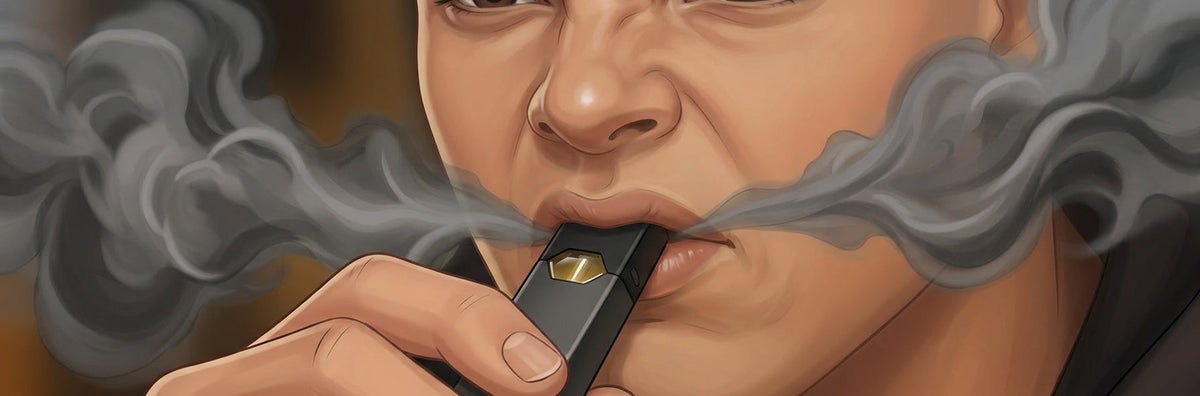
Understanding the Dreaded Burnt Taste: Why Vape Pods and Coils Go Bad
 Photo: @ Digital Imports
There is almost nothing quite as jarring in the vaping experience as taking a relaxed puff from your device, only to be met with a harsh, charred taste. Burnt coils can ruin your vaping experience instead of giving a smooth, sweet, or robust flavour profile of your favourite e-liquid.
Whether you use a sleek, refillable pod system or a high-powered box mod with a sub-ohm tank, encountering a burnt coil is a near-universal rite of passage for vapers. But why does it happen? More importantly, how can you stop it from turning your equipment into expensive paperweights?
To understand why you’re getting a burnt taste, we have to look beneath the plastic casing of your pod or the metal shell of your tank and examine the microscopic mechanics of vaporization.
What Actually Happens Inside Your Pod?
Inside every coil sits a metallic heating element (usually a wire coil or a specialized mesh grid) wrapped snugly against an absorbent wicking material, which is traditionally medical-grade organic cotton.
When you press the firing button or inhale on an auto-draw device, an electrical current flows through the metal wire, causing it to heat up rapidly. Simultaneously, the cotton wick feeds juice continuously to the hot metal. The instant the e-liquid touches the hot coil, it flashes into a dense, flavourful aerosol vapour.

Photo: @ Digital Imports
This process relies on a delicate balance: the liquid must absorb into the wick faster than the heat can consume it.
If the heating element reaches high temperatures while the surrounding cotton is starved of moisture, the metal begins to scorch the dry cotton directly. Inhaling this produces what vapers call a "dry hit" (a temporary lack of moisture which yields a muted, scratchy taste) or a full "burnt hit" (where the organic cotton fibers are genuinely charred). Once cotton is burned, it cannot be un-charred. The burnt flavour coats every subsequent molecule of vapour, rendering the coil permanently ruined.
The Primary Culprits: Why Your Pods Are Tasting Burnt
Several distinct user habits, environmental factors, and e-liquid properties accelerate this breakdown. Recognizing them is the first step toward extending your coil longevity.
1. Failing to "Prime" New Coils Properly
One of the most frequent causes of an immediate burnt taste occurs right out of the box. When you snap a brand-new pod or screw in a fresh replacement coil, the cotton inside is completely bone dry. If you fill the pod and immediately take a heavy puff, the cotton hasn't had adequate time to draw the thick liquid into its dense core via capillary action. The very first fire singes the dry fibers, ruining the coil before it has even seen a full day of use.
2. Chain Vaping Without Pauses
Modern pod systems are compact, convenient, and built for rapid use. However, taking five or six deep, consecutive puffs in rapid succession (known as chain vaping) creates a severe bottleneck. Vaporization happens much faster than the time it takes for fresh e-liquid to travel through tiny wicking ports and re-saturate the inner core. Each successive puff strips the cotton drier than the last, culminating in a sudden, punishing burnt hit.
3. Running E-Liquid Levels Too Low
With traditional clear tanks, keeping an eye on juice levels is easy. With smaller pod systems, viewing windows can be dark, tinted, or obscured. If you continue vaping when the liquid level drops below the pod's wicking ports (the small holes on the sides or bottom of the internal coil), gravity and suction can no longer force liquid into the cotton. Even if a small puddle remains at the bottom of the pod, if it doesn't touch the inlet holes, your wick runs dry.
4. Excessive Wattage or Power Settings
Many advanced pod mods feature adjustable wattage or variable power outputs. Every coil is precision-engineered with a strict operating range (e.g., 12W to 18W) printed directly onto the metal casing or packaging. Cranking your device's power output past the maximum recommended threshold forces the metal to heat up faster than the liquid can possibly vaporize, boiling away the moisture instantaneously and scorching the wick.
Conversely, drastically underpowering a coil can also cause issues. If the power is too low to cleanly atomize the liquid, thick residue builds up and "gums" the coil, restricting future airflow and liquid flow.
5. Heavy Sweeteners and High-Viscosity E-Liquids
The chemical composition of your e-liquid plays a massive role in coil lifespan. Modern commercial e-liquids, especially popular dessert, fruit, and iced/menthol formulations, frequently contain high concentrations of artificial sweeteners like sucralose.
When e-liquid vaporizes, the sweetener caramelizes and leaves behind a sticky, dark residue on the heating coil. Over time, this "coil gunk" builds up layer upon layer, insulating the coil, impeding proper liquid absorption, and introducing a bitter, burnt flavour even when the pod is full. Furthermore, high-VG (Vegetable Glycerin) liquids are naturally thick and viscous; smaller pod systems designed for thin e-liquids struggle to wick high-VG juices efficiently, causing dry spots.
Prevention Guide: How to Keep Your Pods Tasting Fresh
Preventing burnt coils isn't about luck; it's about establishing disciplined maintenance habits. By incorporating these straightforward practices into your routine, you can double or even triple the lifespan of your pods.
Always Prime New Pods and Coils: When installing a fresh pod, fill it to the maximum line and let it sit idle for 5 to 10 minutes before taking your first puff. For extra security, take a few gentle "primer puffs" without firing the device (or turning on the battery) to manually pull e-liquid through the cotton chambers via suction.
 Photo: @ Digital Imports
Respect the "Low Liquid" Threshold: Make it a habit to top off your pod before the liquid level drops below the coil's intake ports. Never let your pod run completely dry; if you notice the flavour beginning to taste muted or slightly flat, check your juice level immediately.
Mind Chain Vaping: Give your device 15 to 30 seconds to rest between puffs, especially if you are using high-nicotine salt liquids that require fewer draws. This brief pause allows capillary action to completely re-saturate the cotton wick.
Stay Within the Manufacturer's Wattage Sweet Spot: If your pod kit features adjustable power, check the recommended wattage limits and start at the lower end of the spectrum. You can increase power gradually, but never exceed the maximum recommended ceiling.
Choose Cleaner E-Liquids: If you find yourself burning through coils every 3 to 4 days, look for e-liquids marketed as "coil-friendly" or options with lower sweetener content. Clear, unflavored, or light tobacco blends tend to leave significantly less residue than heavily sweetened dessert juices.
Match Liquid Viscosity to Your Pod: Ensure your PG/VG ratio matches your hardware. Standard low-wattage pod kits perform best with 50/50 PG/VG blends or nicotine salts. Using thick, high-VG juices (like 70VG/30PG) in tiny pods will choke the wicking ports and cause premature burning.
Conclusion: Can a Burnt Pod Be Saved?
When a pod or coil has crossed the line from a temporary dry hit into a genuinely scorched cotton core, there is unfortunately no way to reverse the damage. Rinsing a burnt pod with water, soaking it in alcohol, or trying to clean it will wash away loose residue, but it cannot restore burnt cellulose fibers.
When the burnt flavour sets in permanently, your only real solution is to discard the old pod or coil and start fresh. Treating your equipment with care by priming properly, keeping liquid levels healthy, pacing your puffs, and choosing cleaner juices will save you money, protect your throat, and enjoy optimal, crisp flavour from every single draw.
Key Takeaways
Need a quick run down of what you need to know about preventing burnt coils? Check out our key takeaways here:
- The Mechanics of a Burnt Hit: A burnt taste occurs when a device's heating element scorches dry cotton fibers, which permanently ruins the wick and taints all subsequent vaporized e-liquid.
- Essential Priming Practice: New pods and coils require 5 to 10 minutes of resting time after being filled so the dry organic cotton can fully saturate before its initial use.
- Pacing Prevents Dry Spots: Rapid consecutive puffs, or chain vaping, vaporize e-liquid faster than the wick can absorb it, requiring 15- to 30-second pauses between draws to allow for re-saturation.
- Mind Liquid Intake Ports: Operating a device when the e-liquid level falls below the coil's exposed wicking holes cuts off fluid flow and starves the cotton of moisture.
- Adhere to Power Limits: Exceeding the manufacturer's recommended wattage ceiling causes the coil to overheat instantly, burning the wick before the liquid can properly atomize.
- Sweeteners Accelerate Breakdown: E-liquids high in artificial sweeteners leave behind caramelized residue that builds up on coils, insulating the wire and impeding fluid absorption.
- Match Viscosity to Device: Low-wattage pod systems work best with thinner 50/50 PG/VG blends, whereas thick high-VG liquids can choke small wicking ports and cause premature burning.
- Burnt Coils Are Irreversible: Once organic cotton fibers are charred, cleaning or rinsing the pod will not remove the burnt taste, necessitating a complete coil or pod replacement.
If you need replacement pods or are looking for juice that won’t kill your coils, check out the selection over at Digital Imports today!